Sold at 3 A.M., Regretted by 3:15: The Infomercial Hall of Infamy
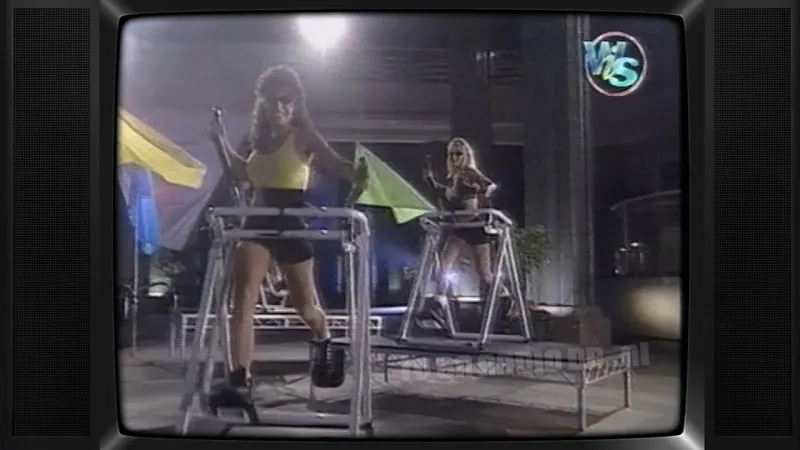
Photo: vintage 1990s infomercial television set with exercise equipment, via i.ytimg.com
There was a brief, beautiful era — roughly 1985 to 2010 — when American television gave up all pretense between midnight and dawn. The late-night airwaves became a lawless bazaar where men in headsets shouted about knives, women in spandex demonstrated machinery no gym would accept as a donation, and every product promised to fix your life in "just minutes a day."
This was the golden age of the infomercial, and it was arguably America's greatest original art form. We're ranking the hall of shame. Scores are based on absurdity, audacity, and likelihood of ending up in a garage sale marked "$2, still works."
Tier One: Crimes Against Physics
The Shake Weight. In 2009, a company sold America a dumbbell that you shake, rhythmically, back and forth, in a motion that can only be described as extremely specific. The commercials aired in prime time. Families watched together. Nobody said anything. The Shake Weight sold 2 million units anyway, proving that Americans will buy anything if you tell them it's exercise, and will definitely buy it if it's also mortifying to explain to houseguests.
The ThighMaster. The grand dame of the genre. Suzanne Somers squeezed it between her knees with the serene confidence of a woman who knew exactly what she was doing to the national psyche, and the national psyche bought millions of them. Here's the twist: the ThighMaster actually kind of worked, which ruined the bit. A dubious product that functions is a dubious product that betrayed its genre.
The Ab Roller / Ab Lounge / Ab Doer / [Any Noun] + Ab [Any Verb]. Late-night TV sold more abdominal equipment than actual gyms have members, and every single one promised a six-pack through a motion best described as "rocking." The six-pack never arrived. The equipment became a clothes rack. The clothes rack is now a garage sale item. The circle of life continued.
Tier Two: Solving Problems That Did Not Exist
The Clapper. "Clap on! clap-clap Clap off! clap-clap" — an entire generation now permanently unable to hear those two words without clapping involuntarily. The Clapper solved the unsolvable crisis of having to walk ten feet to a light switch, and it's still sold today, which makes it either a failure or the most successful product on this list depending on how you define success.
The Flowbee. A vacuum attachment that cuts your hair. Your vacuum. Cuts. Your hair. It aired its infomercial with the confidence of a salon endorsement and sold well enough to still be in production decades later. Somewhere right now, a dad in Ohio is getting a perfectly adequate haircut from a Hoover, and honestly, who are we to judge the economy of it all.
The Hair-in-a-Can family (Spray on hair, HD-360, etc.). For men experiencing the early stages of baldness, late-night TV offered a solution: spray-painting your scalp. The before-and-after shots were filmed in lighting conditions that could make a parking lot look like Tuscany. The product was, at its core, spray paint. For your head. It sold. That's the part to sit with.
Tier Three: Accidental Masterpieces
Here's where it gets complicated, because some infomercial products were so stupid they looped back around to genius:
The Snuggie. A robe worn backwards. That's it. That's the product. It was openly mocked on every late-night show in America, and the mockery was the marketing. The Snuggie sold over 20 million units because being in on the joke is a powerful drug. It remains the greatest ironic purchase in consumer history, and if you own one, no you don't, and yes you do.
The ShamWow. Vince Shlomi shouted at us about a towel for four minutes with the manic energy of a man who had seen the ocean and needed everyone to know about it immediately. The ShamWow absorbed things. That was the whole pitch. It absorbed. And we bought it. By the truckload.
The George Foreman Grill. The exception that proves every rule. A former heavyweight champion put his name on a grease-draining grill, and it became a genuine cultural institution, selling over 100 million units and eventually hanging in the Smithsonian. The most successful infomercial product of all time is now a museum piece, which means the genre did, technically, produce art.
Why the Museum of Snake Oil Closed
The infomercial died not of shame but of competition. The internet took the 3 a.m. audience — the sleepless, the suggestible, the newly paid — and gave them something worse: targeted ads that know your name, your search history, and exactly which dubious gadget you almost bought last Tuesday.
The modern equivalent is a TikTok shop video of a woman demonstrating a garlic chopper with her whole heart. Same energy. Same snake oil. Just no headset, and no one shouting. We miss the shouting.
So pour one out for the genre. Somewhere in a closet in America, a Shake Weight sits on top of an Ab Lounge, under a Snuggie, next to a George Foreman Grill that still works perfectly. That closet is the most honest museum in the country.