Field Notes From the Pretzel Stand: A Survival Guide to the Mall That Refuses to Die
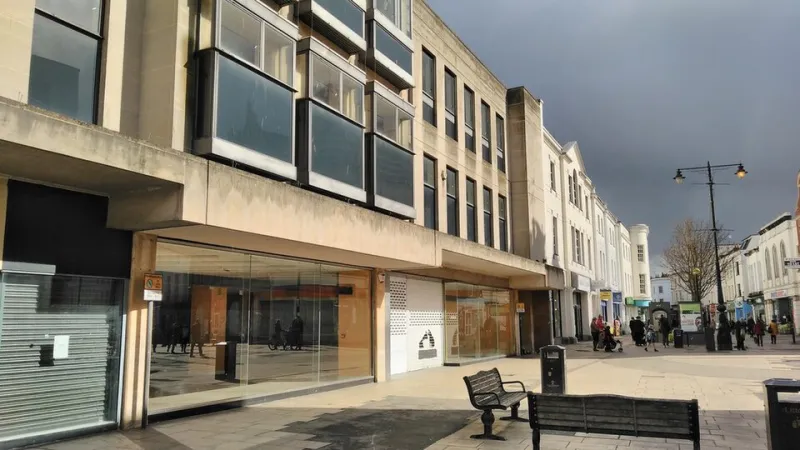
Photo: Philip Halling, CC BY-SA 2.0, via Wikimedia Commons
There is a specific sound a dying mall makes. It's the hum of the HVAC working overtime to cool a space built for ten thousand people, currently serving eleven. It's the distant squeak of one (1) child in an otherwise empty play area. It is, if you listen closely, the sound of the American food court entering hospice with its boots on.
We spent time in these temples of late capitalism — the ones that didn't get the memo, or got it and simply refused to open it. What follows is our definitive ranking of the zones where time forgot to move.
Tier Five: The Fountain That Hasn't Run Since 2014
Every dying mall has a centerpiece fountain, coins still visible at the bottom of a dry basin, wishes that will now never come true. This is the emotional baseline of the whole expedition. Do not linger. The fountain can sense hope.
Tier Four: The Paranormal Séance in a Former Sears
The anchor store is gone, but the shell remains — four acres of dim, echoing nothing that the mall management has, bafflingly, rented out to a haunted house experience, a church, and a martial arts dojo simultaneously. Walking past the darkened entrance on a Tuesday, you genuinely cannot tell which tenant is currently inside. This is the most alive the Sears has been in a decade.
Tier Three: The Candy Store Run by a Man Who Refuses to Acknowledge 2010
The candy store has no website, no card reader, and a handwritten sign that says "NO VAPING." The owner has opinions about self-checkout at other establishments and will share them, unprompted, while hand-bagging gummy sharks. He is the last line of defense. When he retires, the mall officially becomes an art installation.
Tier Two: The Lone Pretzel Stand
The food court once had fourteen options. Now there is one: a pretzel stand, its heat lamps glowing like a signal fire, staffed by a teenager doing homework behind the counter with the resigned patience of a lighthouse keeper. That pretzel is not food. It is a covenant. As long as the lights are on and the cheese pump is operational, the mall is technically still in the game.
Tier One: The Kiosk That Sells Phone Cases, Defiantly
Number one on our list, and it's not close. In a mall with nine occupied storefronts, there is a kiosk — no walls, no door, no logic — selling bedazzled phone cases for devices released during the first Obama administration. Nobody knows who staffs it. Nobody has seen a transaction occur. And yet every visit, it's there, restocked, lit, ready.
That kiosk is not a business. It's a statement of faith. It says: we were here, we sold things, and we will not be the ones who turn off the lights.
In Defense of the Lights Staying On
Look — we know what this is. It's nostalgia with a survival-documentary edge, a tour of a retail ecosystem that the internet ate and spat back out. But there's something stubborn and weirdly beautiful in a place that keeps the fountain plugged in for eleven visitors a day.
The mall was never really about shopping. It was about having somewhere to be. And as long as one pretzel stand keeps its lamps warm and one kiosk keeps its cases bedazzled, somewhere in America, there still is.