Slay Now, Implode Later: The Spectacular Shelf Life of the Empowerment Industrial Complex
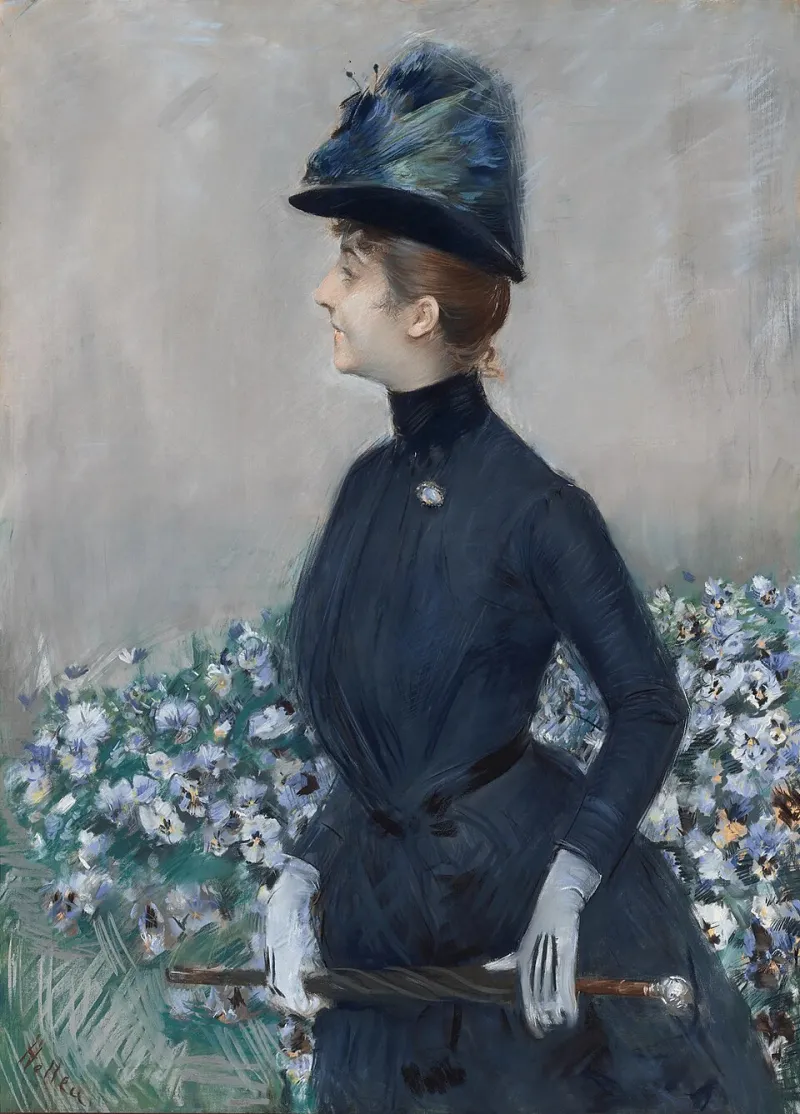
Photo: Paul César Helleu, Public domain, via Wikimedia Commons
There was a moment — a golden, deeply unhinged moment — when the most powerful brand a woman could build wasn't a product or a platform. It was a vibe. Specifically, the vibe of having absolutely everything figured out while wearing linen and holding a green juice that cost fourteen dollars and contained something called "adaptogenic mushroom."
The girlboss was born. And like most things gestated in aspirational Instagram grids and TED Talk lighting, she was absolutely destined to go feral.
We are now living in the aftermath. The compost heap of female empowerment branding is rich with cautionary tales, and honestly? It's one of the most nutritious things the internet has ever produced.
The Architecture of the Hustle Goddess
Let's be clear about what we're diagnosing here, because this isn't about women succeeding. Women succeeding is great. This is about a very specific creature who weaponized the language of female empowerment to construct a personal brand that was, at its load-bearing core, mostly about her.
The formula was elegant in its simplicity. Step one: identify a real, valid pain point that women experience — burnout, body image, financial illiteracy, toxic workplaces. Step two: position yourself as the woman who cracked the code on said pain point. Step three: sell the code back to other women at a markup. Step four: describe all of this as sisterhood.
The wellness space was particularly fertile ground. Somewhere between the jade egg era and the rise of "nervous system regulation" as a personality trait, a whole ecosystem of gurus emerged who were essentially selling the idea that if you just optimized yourself correctly — your morning routine, your mitochondria, your emotional boundaries — you would finally be free. Free, and also available to purchase the next module.
The catch, which arrived reliably and often publicly, was that the woman selling freedom was frequently running the most chaotic operation imaginable behind the scenes.
When the Receipts Are More Hydrating Than the Collagen Powder
The implosion cycle follows a pattern so consistent it could be taught in business school. Phase one: meteoric rise, fueled by relatability content and a genuinely compelling origin story about overcoming something. Phase two: the brand scales, the aesthetic tightens, the prices go up, and the founder starts to believe the mythology. Phase three: a former employee, customer, or collaborator posts a thread.
And that thread, friends, is always long.
We've watched wellness empresses get exposed for selling supplements with ingredients that ranged from ineffective to actively sketchy. We've seen girl boss entrepreneurs whose entire brand was built on "lifting other women up" get outed by their own staff for creating workplaces that would make a Dickens villain wince. We've watched the "I'm just like you" founders quietly charge $2,000 for a course on how to be unbothered while their customer service inbox was a screaming void.
The particular cruelty of the empowerment brand collapse is that the language of feminism gets conscripted into the defense. Criticism becomes "tearing women down." Accountability becomes "misogyny." The audience that was told to trust their gut is now being told their gut is a hater.
The Aesthetic Was Always the Product
Here's the uncomfortable truth that the girlboss era never wanted to reckon with: the aesthetic of empowerment is not the same thing as empowerment. A Canva quote about your worth over a photo of a woman staring pensively at the ocean does not a movement make. Neither does a podcast called something like Unbothered & Abundant hosted by someone who is, evidently, quite bothered and operating at a loss.
The visual language of the genre — the neutral tones, the clean desk setups, the very specific way of tilting your head while listening to yourself speak — became such a recognizable shorthand for "trustworthy female entrepreneur" that it essentially functioned as camouflage. If you looked the part convincingly enough, the scrutiny arrived later. Sometimes much later. Sometimes after a lot of people had already bought the masterclass.
This isn't to say every woman who built a brand in this space was a grifter. Plenty weren't. But the ones who imploded most spectacularly shared a common trait: they had confused the performance of having values with the actual practice of them.
The "That Girl" Trap
A more recent mutation of the girlboss is the "that girl" influencer — she wakes up at 5 a.m., she has a Pilates body and a journaling practice, she eats whole foods and reads Stoic philosophy and somehow has time to build a business while looking completely unruffled. She is aspirational by design.
The trap is that "that girl" is, by structural necessity, defined against everyone who is not that girl. The whole framework requires a hierarchy. And hierarchies, even when they're dressed in soft earth tones and described as "a community," tend to benefit exactly one person at the top.
When the cracks appear — and they appear — they tend to appear along the same fault lines every time. The audience discovers that the lifestyle was curated, not lived. The products were endorsed, not used. The vulnerability was strategic. The sisterhood had a paywall.
What Actually Survives
Here's where Rickety Swank will offer you something rare: a note of genuine optimism, delivered with appropriate skepticism.
The collapse of the girlboss industrial complex has made room for something messier and more honest. Creators who talk about failure without pivoting to a course about failure. Women building businesses who will tell you plainly what something costs and why, without dressing it up in liberation rhetoric. Communities that are actually reciprocal rather than parasocially one-directional.
The audience got smarter, too. The same internet that made these brands possible also became the mechanism of their undoing — and that accountability infrastructure, chaotic and imperfect as it is, represents something real. You cannot sell "I see you" indefinitely to people who are paying attention.
The girlboss graveyard is, in its way, a testament to how seriously people took the promise. They wanted it to be real. They bought in because the idea of women building power on their own terms is genuinely compelling. The rage when it turned out to be a brand exercise was proportional to the hope that preceded it.
So here we are. The linen is wrinkled. The adaptogens are under scrutiny. The 5 a.m. alarm is going unanswered.
And somewhere, a new version is already workshopping her origin story.
We'll be watching.